Feedback is of fundamental importance in building self-regulated learning skills.

Feedback is viewed as central to the enhancement of the learning process (Hawe & Dixon, 2017), and the development of self-regulated learning (Fyfe & Rittle-Johnson, 2016).
Hattie and Timperley (2007) discussed the power of feedback to impact learning when it is focused on supporting students in how to improve their work.
Activity: Play the video which addresses this point, and highlights the role of feedback in self-regulated learning development.
REFLECTION ACTIVITY
Activity: Consider to what extent you work with students to clarify what feedback is, how to seek, give and use it? Do students know what they are entitled to ask for? How is agency promoted?
Note down ways in which this understanding could be enhanced – especially through dialogue with your students.
It is important for students to develop their own understandings of the feedback provided. For effective self-regulation to occur, students must have opportunities to construct their own meaning from the received message (Clark, 2012; du Toit, 2012; Sadler, 1989).
Developing metacognitive skills through the judicious use of feedback:
In the development of self-regulatory skills, students need to develop the metacognitive domain – the ability to evaluate the learning methods and activities they are undertaking, and to identify areas for improvement and development.
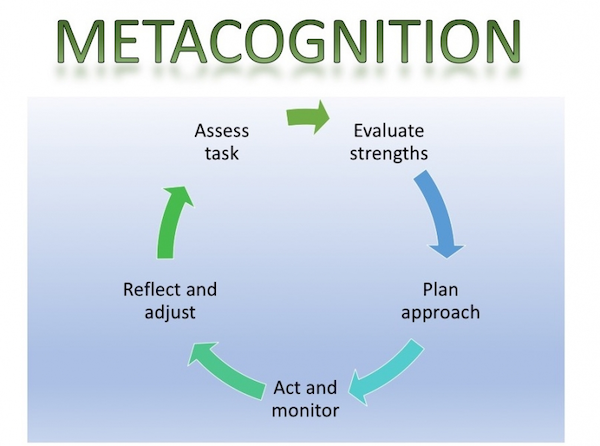
This process has feedback at the very heart of it, as guidance from more-experienced others is fundamental to the development of metacognitive skills skills (Brown et al., 2016; Du Toit, 2012).
It is often assumed that students know what to do with their feedback, but there is ample evidence from the literature that this is not the case – especially with students who are at the start of their Higher Education experience.
Students need to develop skills in utilising feedback, as part of learning how to learn.
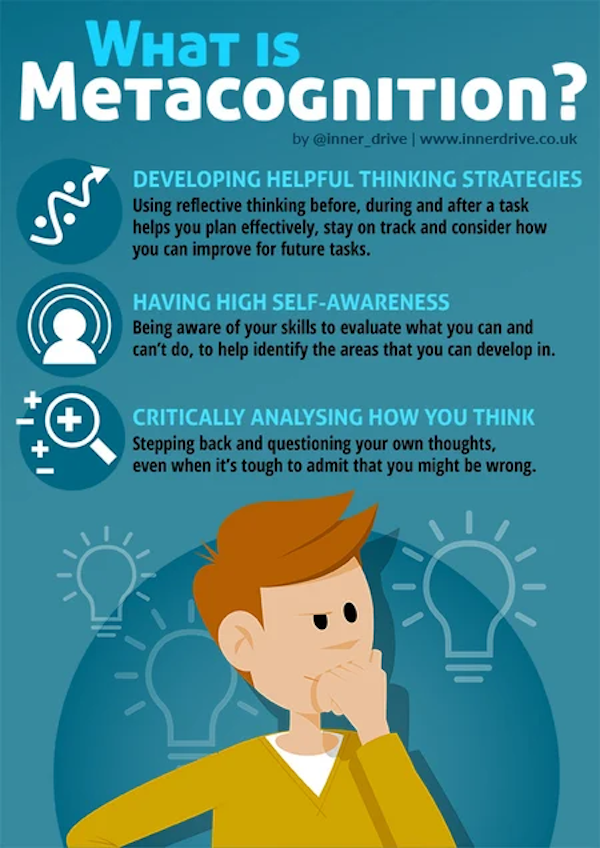
Effective self-regulated learners are
* Efficient in use of feedback (selective in what feedback to use and effective in deploying it to enhance performance)
* Confidence their own ability (able to act in their learning with surety and confidence that their approach has been optimised)
* Effective at filtering information (able to select which concepts of facts are fundamental, and which methods to adopt for the best effect, whilst filtering-out the unnecessary, or potentially-distracting, information.
* Flexible in being able to adapt thinking (from the feedback provided, the capacity to identify problem issues, and the ability to change strategies when they realise that the one they have adopted is not working/not effective).
These require a focus on students’ ability to:
– Accurately identify the key intended messages in feedback;
– Use feedback effectively to enhance performance;
– Be open to alternative ideas and approaches and willingness to try new strategies;
– Manage the emotional dimension of feedback and can take feedback at the task and not personal level.