The key issue with feedback is landing the feedback so students can make sense of it.

We also need to ensure that the quality of the feedback provided is consistent between all students, so that there is equitable support for students, each according to their own particular needs for development. However, we need to ensure that we support students in understanding how to make sense of feedback, and use it effectively.
Activity: Identify the activities in place within your own context (your Department/School, or your course/module) to check students’ understanding and use of feedback?
This video highlights some of the challenges to students understanding their feedback, and how to address them.
INVESTIGATION
Students need multiple opportunities to assess work for themselves so they can internalise the requirements of assessment (Sadler, 2009b).
FINALISE Reading activity related to this [Link to open access paper]
Feedback Landscape Model
This figure is the ‘Feedback Landscape’ model (adapted from Evans 2013 ).
Click image to enlarge
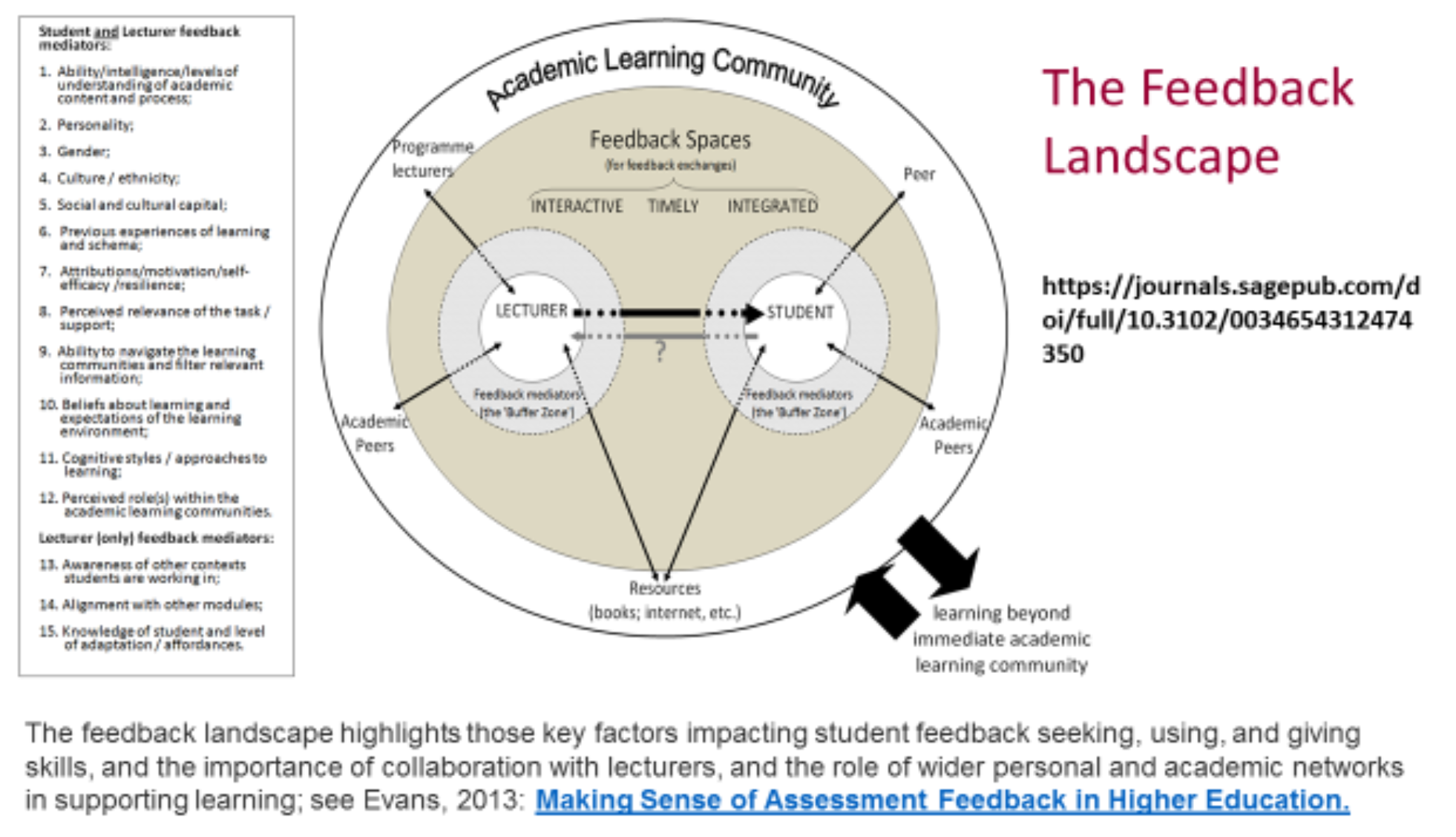
Activity: Using this as a model for the various stakeholders in the feedback process, identify where the potential barriers and opportunities are for the provision of feedback in your own context.
What are the issues that challenge the students? Are they related to staff? Procedures? Interactions?
What are the potential ways in which you could utilise these interactions to encourage students to better engage with the feedback provide?

PRODUCTION ACTIVITIES
Co-create a simple guide or video with students to support them to become active agents and use their feedback effectively (e.g. ‘what was good, what let you down and what resources are you going to use to improve’?). the process of devising this will reinforce the concepts of feedback literacy with the students.
Co-create a simple guide or video with students aimed at staff, focusing on what the students would regard as useful, supportive, motivational and impactful feedback.