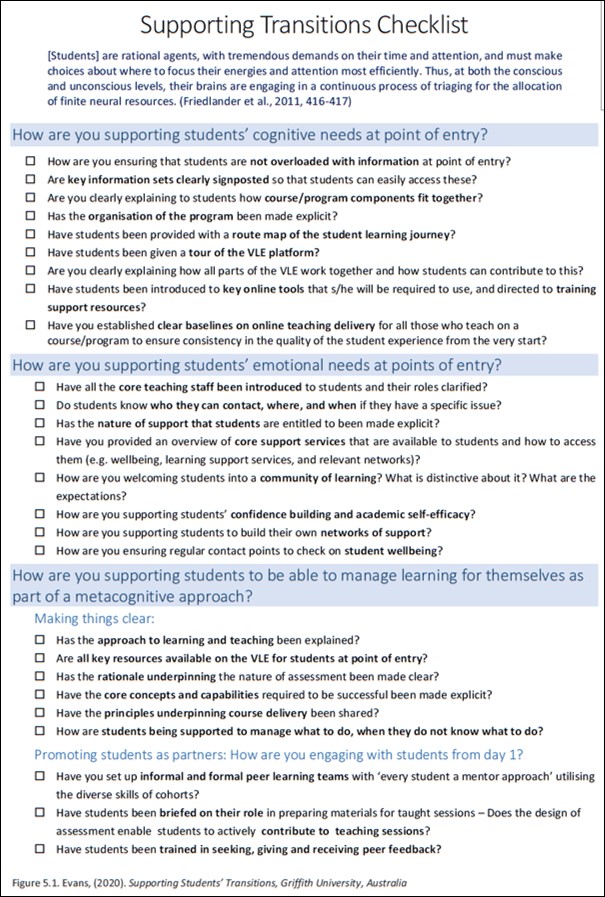
One of the ways in which assessment needs to be flexible and supportive of equal opportunities is during student transitions from one stage of learning to the next. This could be progressing from one academic year to the next, or from one teaching style to another (e.g. lecture-based to workplace-based/clinical). It could also be transitions in expectations from learning outcomes.
Different students will manage transitions easier or with more difficulty. Assessment design can be a valuable tool in managing those transitions. This figure suggests some elements in which assessment could impact on transition points between educational stages.
click image to enlarge
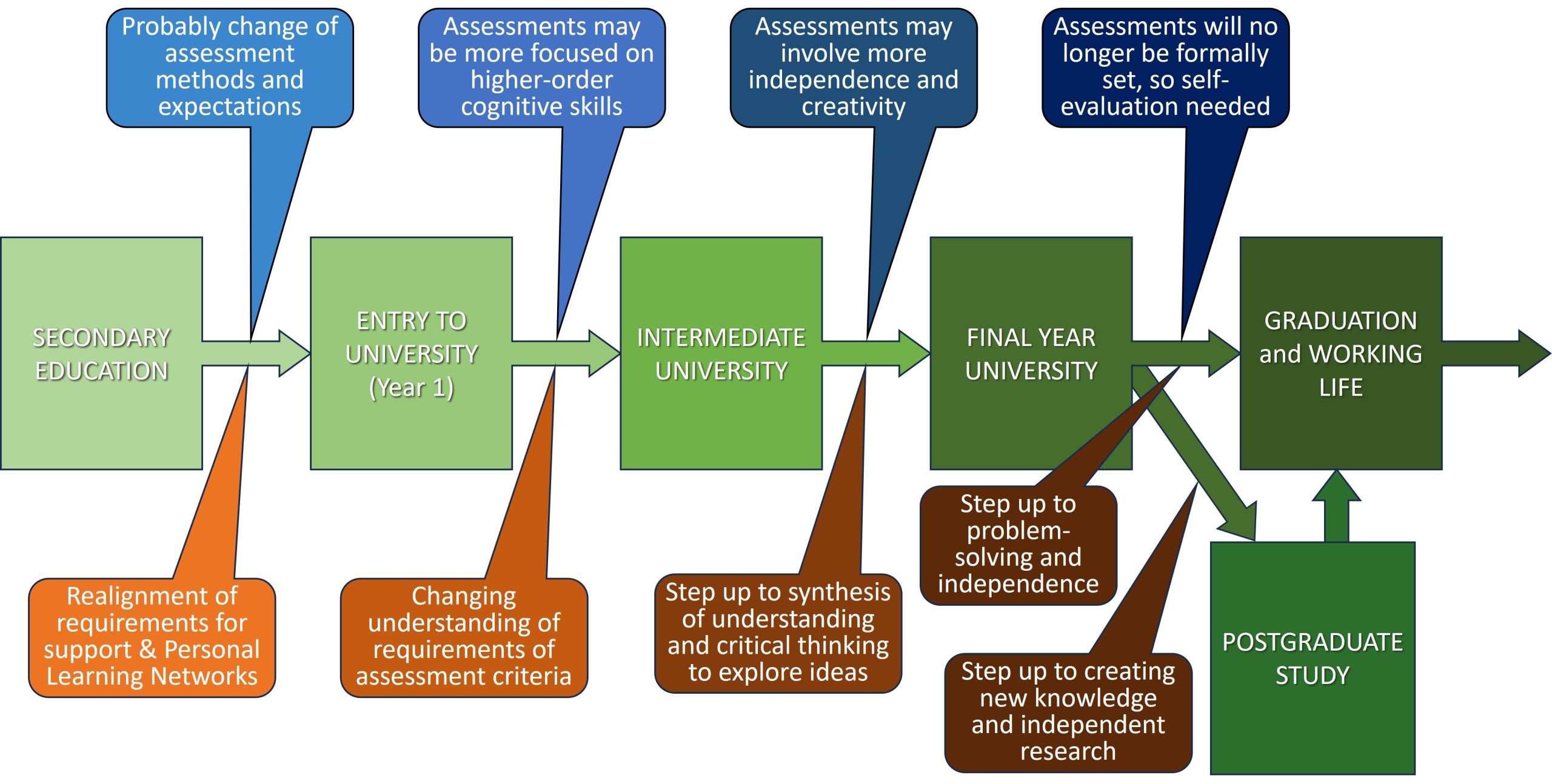
The issues surrounding supporting transitions are discussed in depth in the EAT-Erasmus Self-Regulation Report (pp 55-56). This screenshot highlights some of the fundamental considerations:
click image to enlarge
Supporting students to set goals, map their progress, and understanding the requirements placed on them underpin these considerations. However, in HE we often don’t manage these transitions well, or support them sufficiently through learning activities and assessment. Yet this is one of the main ways in which learners with individual differences will be impacted by factors that are situational, rather than about their understanding of the material, and achievement of learning outcomes.
REFLECTIVE ACTIVITY
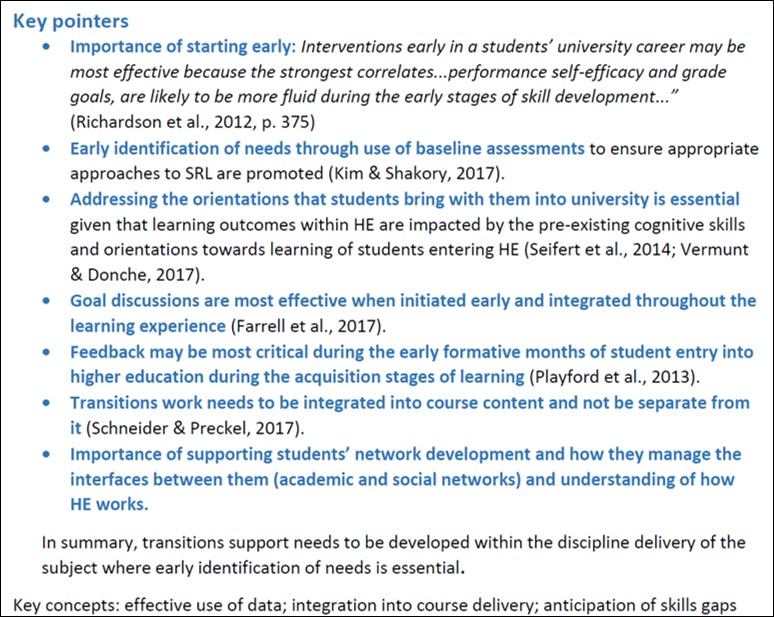
Work your way through the Transitions Checklist (Evans, 2020) on p56 of the EAT-Erasmus Self-Regulation Report (also available here as a PDF).
What elements of provision for your students need to be adapted to support effective transitions within your degree course(s)?
click image to enlarge