Agentic engagement of learners
Key hallmarks of students who display agentic engagement have been suggested by Evans (2013).

These characteristics include:
· savvy assessment feedback seekers will look for guidance and advice from a range of sources
– proactive individuals able to modify the assessment environment to make it work better for them, they can see where the elements of the assessment relate well to their own goals and aspirations/aims/needs.
· active change agents and influencers will make their voices heard, and engage in dialogue and co-development with peers and educators,
· students who know how to use the assessment environment well and enhance it through their engagement with it.
REFLECTION ACTIVITY
How can we provide an environment relating to an assessment which encourages these behaviours from our students?
What are the potential challenges associated with agentic engagement?
Supporting Agentic Engagement
Students need to be challenged to step up and supported in developing the skills to engage; this ought to be a focus at point of entry into higher education, and as they progress through to graduation and beyond.
The ways students are inducted into their roles within assessment needs to be considered at key points in transition though higher education. These considerations include not underestimating the skills that students bring with them into higher education.
Students need to know the boundaries of engagement from the outset – clarity is needed around expectations and needs agreement at the beginning of a course to ensure students have allocated the space and time to do this and are cognisant of what this means in how they organise their work.
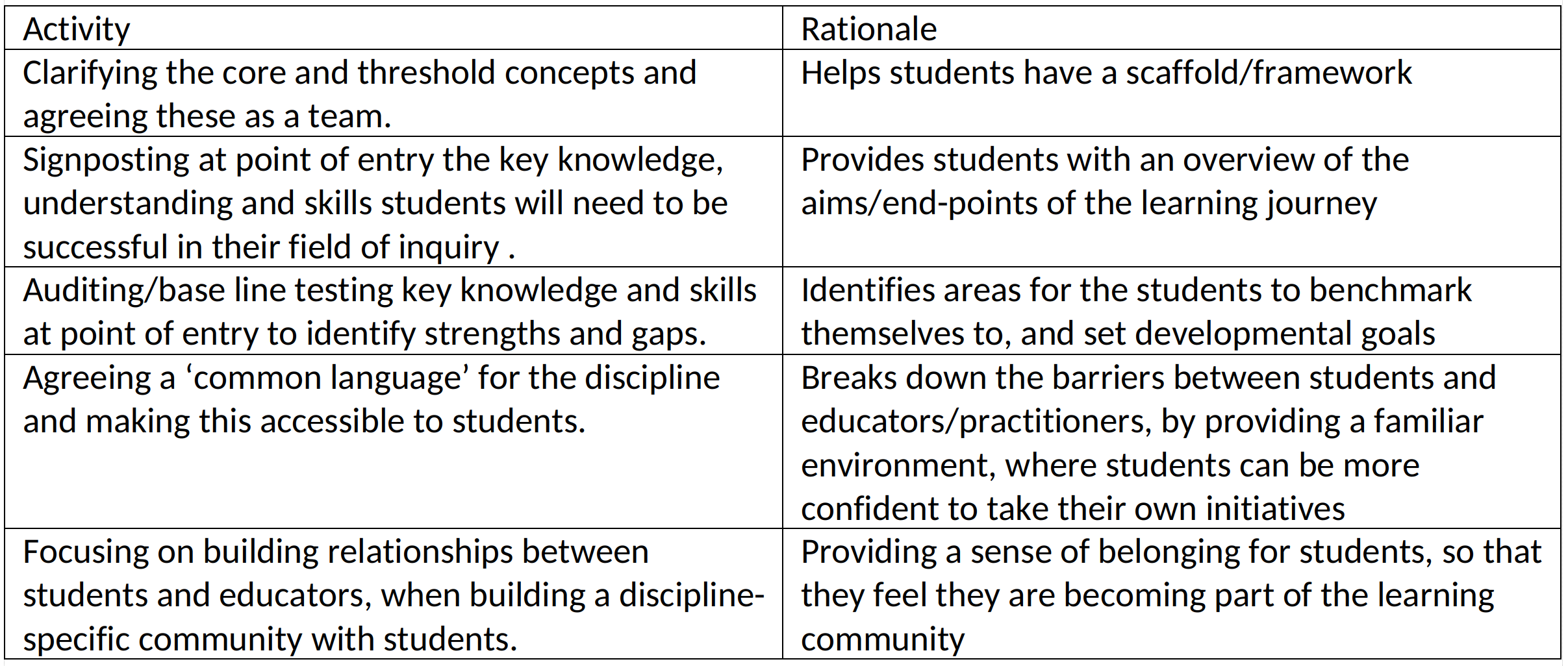
The EAT Framework suggests a series of approaches that can be undertaken to create an environment which encourages and nurtures agentic engagement:
click image to enlarge