Inclusivity and equity in assessment not only benefits students with disabilities or special circumstances, but provides a benefit to all students, regardless of their background. Embedding inclusive practices within our learning, teaching and assessment activities is not straightforward, however, and requires some significant shifts in teaching philosophies and approaches.
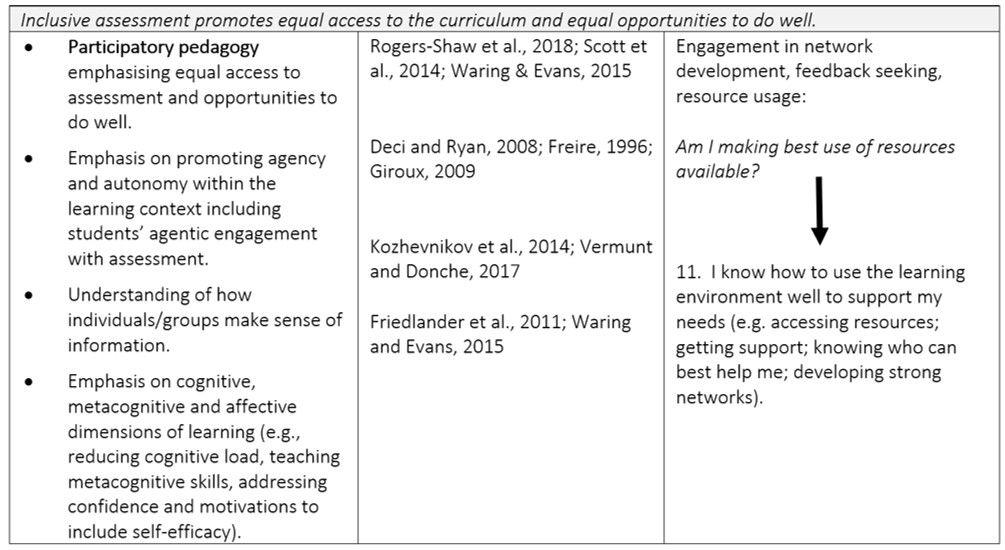
This figure, taken from Evans and Zhu (2023) shows some of the transitional conceptual shifts that educators need to make in relation to this dimension. In particular encouraging variety and flexibility of assessment and supporting student agency, autonomy and informed/supported choice are important.
click image to enlarge
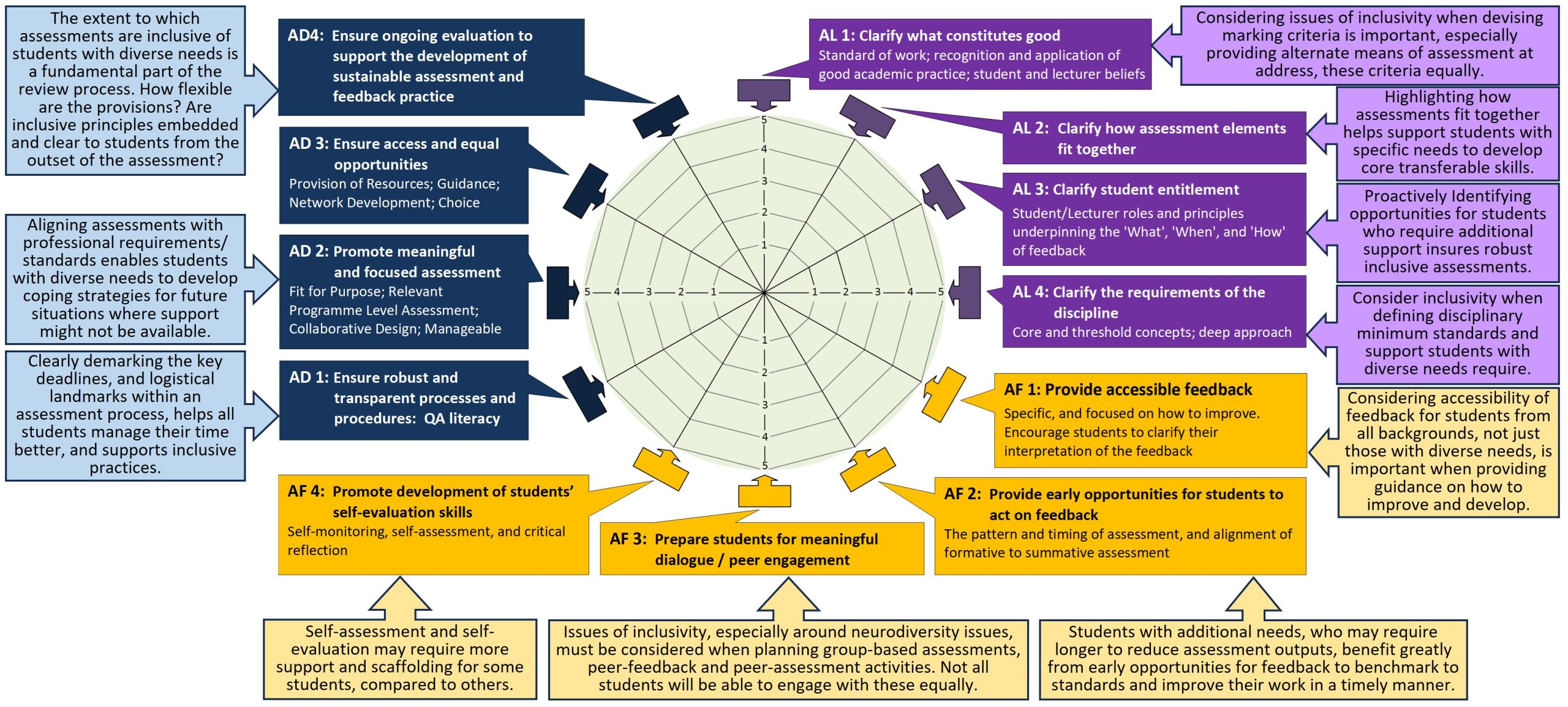
As with the other dimensions of EAT, the promotion of equitable assessment is connected to all other aspects of assessment highlighted in the EAT Framework.
This graphic summarises some of these linkages, but there are many more, especially as equity and inclusion are fundamentals in any educational practice that seeks to empower and support students as they progress into the rest of their lives.
click image to enlarge
Module reference list