The concept of universal design is applicable to the design of assessment and feedback. It promotes an approach to assessment designs that is adaptive.
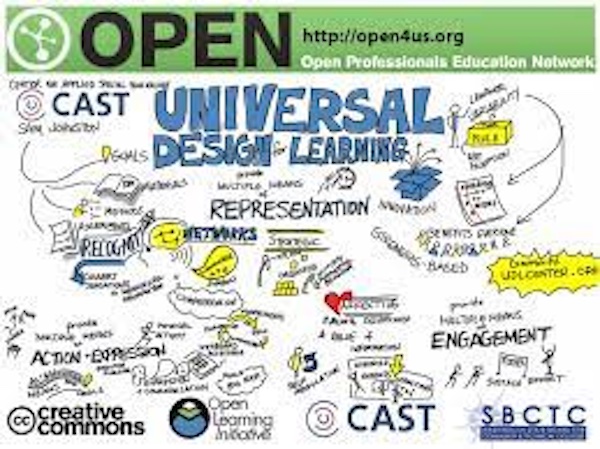
This means that the assessment approach can be revised to be delivered in a variety of ways, but with the same rigour and validity. Adaptive assessment can enable access for all learners rather than focusing on designing individual alternative assessments to suit the needs of specific groups (Evans et al., 2015; Waring & Evans, 2015).
With learning, and especially assessment, the principles of Universal Design for Learning (UDL; CAST, 2015; Rogers-Shaw, et al., 2018) are becoming heavily-embedded within the Higher Education sector. UDL is an inclusive educational framework that aims to create equitable learning experiences for all students, including those in higher education.
When it comes to assessment in higher education, UDL principles can play a pivotal role in ensuring fairness and accessibility. However, there is little evidence of the effectiveness of UDL in HE given the many different ways in which it has been interpreted.
This diagram, taken from the UDL Guidelines, summarises the dimensions of the UDL framework.
click image to enlarge
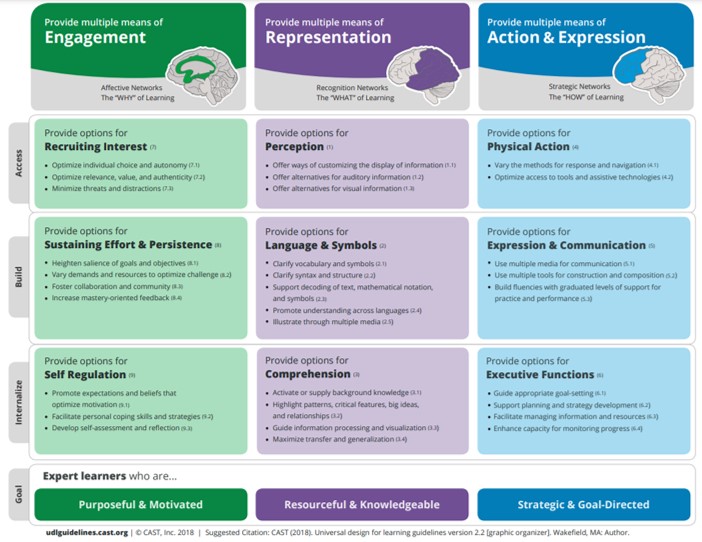
Find out more information on UDL
The next figure summarises some of the elements underpinning UDL relative to assessment. UDL reimagines assessment in higher education by fostering inclusivity and accommodating the diverse needs of students.
click image to enlarge
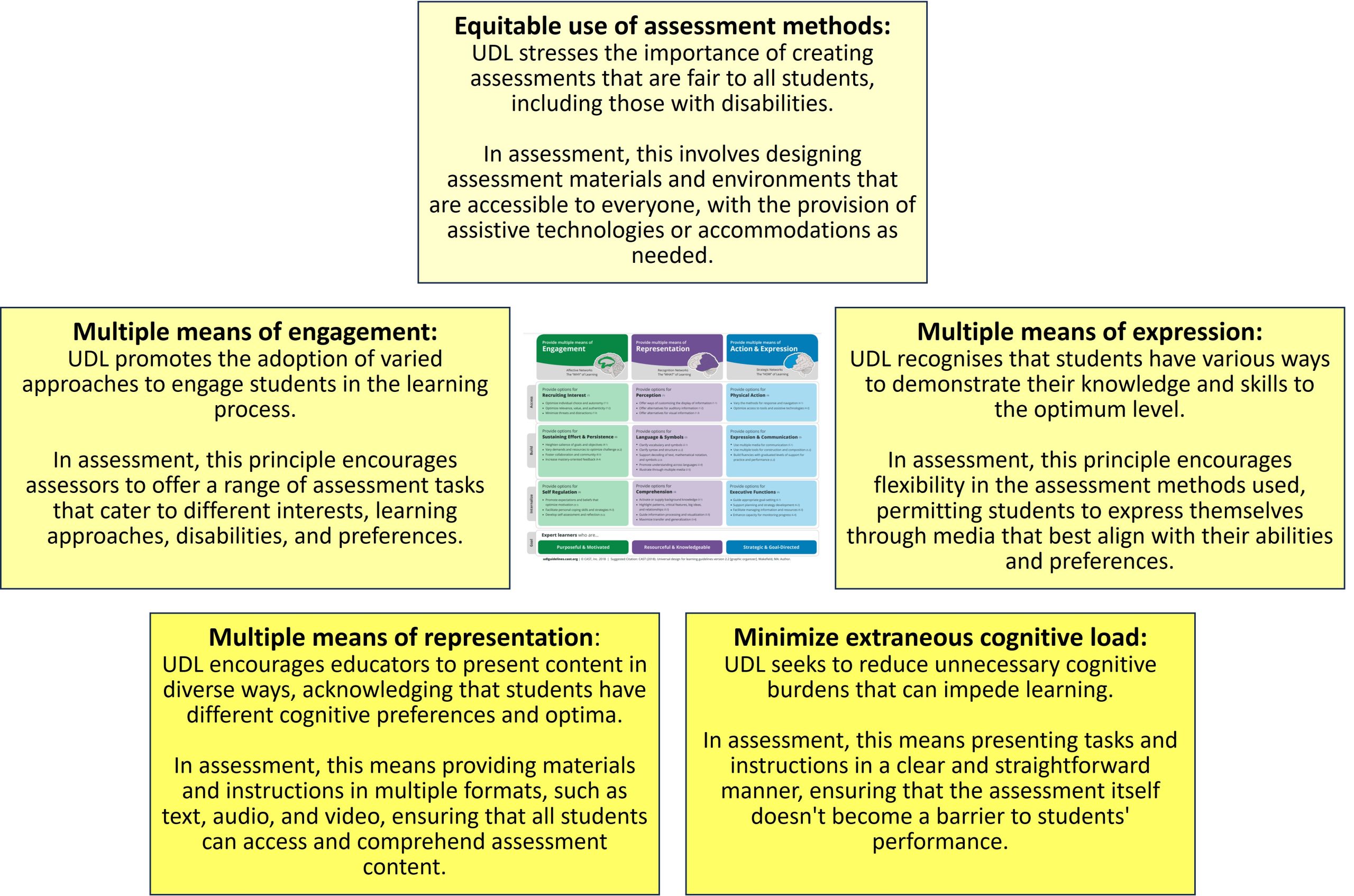
UDL in assessment recognises that learners have diverse needs, backgrounds, and abilities. It emphasises flexibility and customisation in the assessment process to create assessments that are accessible to all.
The main elements focus on providing alternatives and multiple modalities of expression and engagement for learners.
Incorporating UDL into assessment means providing multiple means of engagement, representation, and expression. Assessments should be designed in a way that allows students to showcase their knowledge and skills using various formats.
UDL encourages educators to offer choices in assessment methods, ensuring that students can select the approach that best suits their strengths and preferences.
However, choice in assessment which is not negotiated may lead to increased discrepancies in outcomes as students who regulate poorly make poor choices (Evans & Waring, 2021).
REFLECTIVE ACTIVITY
Identify an assessment approach that you either deliver, or support, or have experienced yourself as a learner.:
· To what extent does the assessment provide alternative options for students with differing learning preferences (as well as those with learning-related disabilities)?
· To what extent do different choices in assessment enable students to equally demonstrate the required learning outcomes?
· What are the opportunities and barriers to changing your assessment approach to align with UDL principles? How feasible is this?
UDL emphasises the importance of clear instructions and accessible materials; e.g. providing students with clear rubrics, guidelines, and resources that support their understanding of assessment tasks.
Computer technologies and Artificial intelligence already offer considerable opportunities to support adapted designs but require strong pedagogy underpinning them and data analysis skills to pull out the complex relationships between variables to address preconceived assumptions about learning.

AI has opened up considerable opportunities to provide adapted learning to suit individual learners; this technology needs to be harnessed more effectively by HEIs to support student autonomy in learning.