Self-Regulatory Learning (SRL) capacity in learners can be developed. However, some individuals are capable of more SRL flexibility than others (Kozhevnikov, et al., 2014).

Learners can activate metacognitive flexibility (the ability to adapt strategies to best meet the needs of different situations) to differing extents. This difference is highly influenced by inbuilt, personal individual differences between learners.
This extract from the EAT-Erasmus Self-Regulation report focuses on the concept of self-regulation individual differences in learners.
click image to enlarge
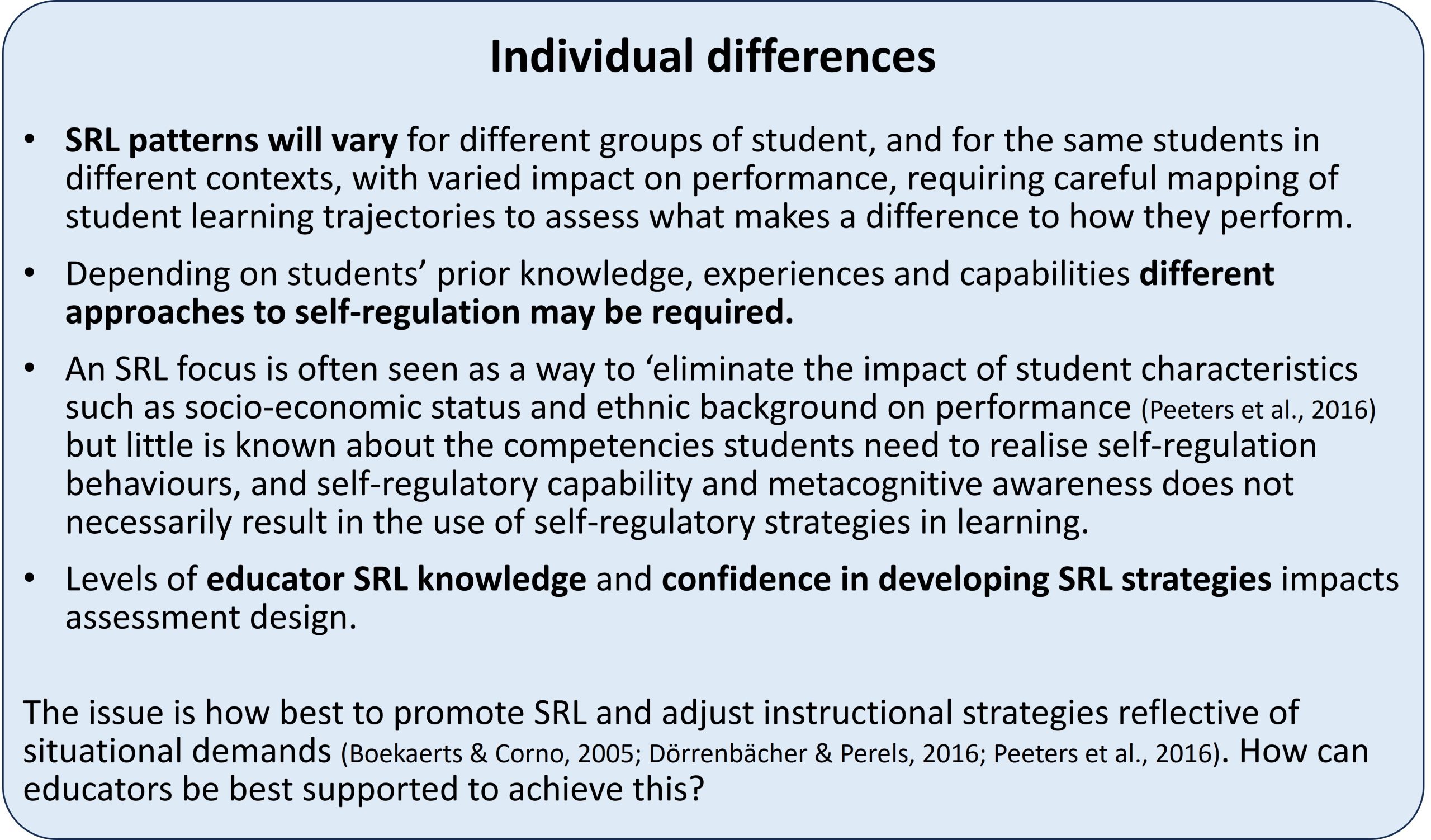
With the diversity of learning approaches that leaners use, with many learners being tied to the habitual use of ineffective strategies (DiFrancesco et al. 2016), the quality of the design and delivery of assessments (indeed all of the curriculum) can make a significant difference.
So, how do we design learning activities and assessments that are Inclusive?
Equal access to learning can be considered conceptually in a number of different ways that are integral to EAT
· a participatory pedagogy philosophy to inform underpinning principles and values (Scott et al., 2014; Waring & Evans, 2015);·
– a cognitive styles pedagogy to support students’ navigation of the requirements of assessment, and appreciate how individuals make sense of information such as the Personal Learning Styles Pedagogy (Evans & Waring 2009; Kozhevnikov et al., 2015), and
· a critical pedagogy (Freire, 1996, Giroux, 2009), to ensure that no learners are being disadvantaged by assessment process and design.
In order to ensure that all learners have the same access to quality learning, and the same opportunity to demonstrate that learning through assessment, we need to embed inclusive approaches in our learning and teaching, and especially in our assessment.
REFLECTION ACTIVITY
For your students within your discipline, think of the different ways in which your students differ in their learning approaches, and the extent to which they engage with learning activities you provide.
What might be the rationale for students engaging less with the activities?
Consider the wide variety of students that are taking your course, and the different requirements that they might have on their lives, they might need to manage many competing demands (e.g. work commitments, caring responsibilities).